
Call London and Surrey Windows for Sliding Sash Windows Company in Wrecclesham Reviewed
 Sliding Sash Windows Wrecclesham Company, call London and Surrey Windows on 0208 058 2765 or use our simple online contact form. Our experienced, independently star rated, Wrecclesham Sliding Sash Window (Installation) Team can assist you with any Sliding Sash Windows in Wrecclesham Reviewed requirements, so please do not hesitate to contact our team on 0208 058 2765.
Timber endures as the traditional and commonly favoured material. Softwood and hardwood options, along with engineered timber, deliver genuine character, good insulation when correctly specified, and the advantage of repairability. Planning authorities in conservation zones and listed properties commonly insist on timber construction.
To Contact

Modern material choices include quality uPVC and aluminium systems created to match timber profiles. They supply reduced maintenance, comparable energy efficiency and a broad selection of colours or wood-effect finishes. Aluminium supplies extra rigidity for wide spans, whereas uPVC offers the most cost-effective route for many owners.
The practical benefits of sash windows are numerous. Simultaneous top and bottom openings create effective controlled airflow. Balanced proportions allow generous daylight to enter rooms. Fitted with modern double or triple glazing, seals and performance glass, they achieve high levels of energy efficiency and acoustic insulation.
Careful restoration and thoughtful replacement are essential for Britain’s period housing. Many original frames can be repaired, draught-sealed and fitted with slim double glazing while keeping their character intact. New timber or high-quality replica windows help owners preserve architectural integrity within conservation areas.
Sash windows have evolved from aristocratic novelty to everyday feature and back to prized heritage asset. Practical usefulness joined with aesthetic grace and historical depth maintains their place at the heart of British housing. Whether restoring Georgian terraces, replacing windows in Victorian villas or specifying units for modern developments, the sliding sash continues as a versatile and enduring choice that joins past craftsmanship with present-day standards.
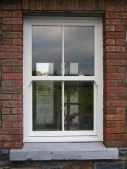
Today two primary mechanical approaches are employed. Classic box sash windows enclose heavy weights inside hollow timber boxes, preserving authentic movement and visual qualities. Modern spring-balanced versions employ concealed spiral springs that permit thinner frames and easier installation. Double-hung units allowing independent movement of both sashes, together with single-hung alternatives, continue to be produced.
Sash windows remain one of the most recognisable and cherished features of British architecture. These upright sliding windows have moulded the façades of streets and houses throughout the United Kingdom for more than three hundred years. Their elegant proportions, practical ventilation and timeless character continue to make them the preferred choice for period properties and many new builds alike.
Sash window development commenced towards the end of the seventeenth century. Researchers still differ on whether the design began in England, the Netherlands or France, yet Britain swiftly became the place where it flourished. Early examples appeared at properties such as Ham House in Surrey during the 1670s. Sir Christopher Wren together with expert joiners refined the counterweight mechanism and encouraged its wider use.
The Georgian period of 1714 to 1837 saw sash windows reach their fully developed classic state. Tall, narrow windows with six-over-six pane arrangements became the hallmark of elegant townhouses in London, Bath, Edinburgh and beyond. Restricted pane sizes resulting from glass technology required numerous thin glazing bars. Fire-related building statutes encouraged frames to be set back, generating the deep reveals that remain distinctive today.
Between 1837 and 1901 the Victorian age transformed sash design. Better glass technology permitted larger individual panes and consequently simpler two-over-two or single-pane arrangements. Decorative horns were added to strengthen the meeting rails and prevent breakage. Bay windows increased in frequency, and abolition of the window tax enabled sash windows to appear on dwellings of every class.
Windows of the Edwardian period, dating approximately 1901 to 1914, frequently blended previous traditions. Six smaller upper panes above two larger lower panes formed a frequent pattern. Windows of this period were generally wider and visually lighter than Victorian examples.
Period identity is still conveyed through pane layout. Georgian examples usually show six-over-six or eight-over-eight divisions supported by slender bars. Victorian examples favour two-over-two layouts with larger glass areas. Edwardian designs often unite multi-pane upper sashes with unrestricted lower panes.
