
Call London and Surrey Windows for Sliding Sash Windows Company in Blackheath Local
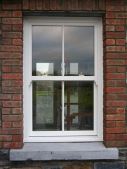 Sliding Sash Windows Blackheath Company, call London and Surrey Windows on 0208 058 2765 or use our simple online contact form. Our experienced, independently star rated, Blackheath Sliding Sash Window (Design) Team can assist you with any Sliding Sash Windows in Blackheath Local requirements, so please do not hesitate to contact our team on 0208 058 2765.
Timber continues as the traditional and often preferred material. Softwoods, hardwoods and engineered products supply authentic looks, strong thermal qualities when well detailed, and the capacity for repair rather than wholesale replacement. In conservation areas and listed buildings, timber is regularly the sole material permitted by planning rules.
To Contact

Modern material options comprise refined uPVC and aluminium systems that closely copy timber profiles. They offer reduced maintenance needs, solid energy performance and varied finishes including wood effects. Aluminium supplies extra rigidity for wide spans, whereas uPVC offers the most cost-effective route for many owners.
Practical advantages of sash windows are considerable. Simultaneous top and bottom openings create effective controlled airflow. Balanced proportions bring abundant natural light indoors. When equipped with modern double or triple glazing, draught seals and high-performance glass, they deliver strong energy efficiency and sound insulation.
Restoration work and sensitive replacement play an essential role in preserving Britain’s historic housing. Many original frames can be repaired, draught-sealed and fitted with slim double glazing while keeping their character intact. New timber or faithful replica units allow owners to uphold the visual integrity demanded in protected locations.
Sash windows have travelled from exclusive novelty through common use and returned as a valued heritage feature. Practicality combined with elegance and historical depth ensures they remain a defining element of British homes. Whether updating a Georgian terrace, renewing a Victorian house or installing units in a new scheme, the sliding sash provides a flexible and lasting solution that connects traditional skill with modern requirements.
Today two primary mechanical approaches are employed. Traditional box sash windows house substantial counterweights within hollow timber frames, guaranteeing authentic operation and appearance. Spring-balanced alternatives rely on concealed spiral mechanisms that support thinner sections and more straightforward installation. Double-hung systems permitting free movement of both sashes, plus single-hung variants, remain standard.
Sash windows remain one of the most recognisable and cherished features of British architecture. Vertically sliding windows of this type have influenced the appearance of streets and residences across the country for well over three centuries. Their elegant proportions, practical ventilation and timeless character continue to make them the preferred choice for period properties and many new builds alike.
Sash window development commenced towards the end of the seventeenth century. Scholars continue to discuss whether the concept originated in England, Holland or France, although Britain soon established itself as the design’s principal home. Early examples appeared at properties such as Ham House in Surrey during the 1670s. Sir Christopher Wren and his master joiner played an important role in refining and popularising the counterbalanced sliding mechanism.
Georgian architecture between 1714 and 1837 saw sash windows achieve their mature classic expression. Tall and slender windows arranged in six-over-six patterns became signatures of refined townhouses across London, Bath, Edinburgh and other cities. Constraints of contemporary glass production required multiple slender glazing bars. Fire-related building statutes encouraged frames to be set back, generating the deep reveals that remain distinctive today.
Victorian developments spanning 1837 to 1901 introduced major advances. Advances in glass production allowed larger panes, leading to simpler two-over-two or even one-over-one configurations. Strengthening horns appeared on the meeting rails. Bay windows proliferated, and removal of the window tax allowed sash windows to reach households across the social spectrum.
Edwardian sash windows, produced roughly between 1901 and 1914, often combined earlier influences. One typical pattern placed six smaller panes above two larger ones. Windows tended to be wider and lighter in appearance than their Victorian predecessors.
Pane configurations continue to define period styles. Georgian windows characteristically show six-over-six or eight-over-eight patterns with fine bars. Victorian examples favour two-over-two layouts with larger glass areas. Edwardian designs often unite multi-pane upper sashes with unrestricted lower panes.
