
Call London and Surrey Windows for Sliding Sash Windows Company in Weybridge Replacement
 Sliding Sash Windows Weybridge Company, call London and Surrey Windows on 0208 058 2765 or use our simple online contact form. Our experienced, independently star rated, Weybridge Sliding Sash Window (UK) Team can assist you with any Sliding Sash Windows in Weybridge Replacement requirements, so please do not hesitate to contact our team on 0208 058 2765.
Timber continues as the traditional and often preferred material. Softwoods, hardwoods and engineered products supply authentic looks, strong thermal qualities when well detailed, and the capacity for repair rather than wholesale replacement. Planning authorities in conservation zones and listed properties commonly insist on timber construction.
To Contact

Present-day alternatives feature high-grade uPVC and aluminium systems engineered to echo timber profiles. Such materials deliver reduced upkeep, comparable energy performance and extensive colour or wood-grain options. Aluminium offers particular strength for larger openings, while uPVC remains the most economical option for many homeowners.
Numerous practical advantages accompany sash windows. Controlled ventilation is achieved by admitting air simultaneously at the upper and lower openings. Balanced proportions allow generous daylight to enter rooms. With contemporary double or triple glazing, seals and high-specification glass they attain impressive energy efficiency and noise reduction.
Restoration work and sensitive replacement play an essential role in preserving Britain’s historic housing. Many original frames can be repaired, draught-sealed and fitted with slim double glazing while keeping their character intact. Fresh timber or accurate replica windows help owners preserve the architectural quality required in protected areas.
Sash windows have evolved from aristocratic novelty to everyday feature and back to prized heritage asset. Practicality combined with elegance and historical depth ensures they remain a defining element of British homes. Whether restoring a Georgian terrace, replacing windows in a Victorian villa or specifying new installations for a modern development, the sliding sash remains a versatile and enduring choice that links past craftsmanship with present-day living standards.
Two main mechanical types are produced today. Traditional box sash windows house substantial counterweights within hollow timber frames, guaranteeing authentic operation and appearance. Modern spring-balanced or spiral-balanced versions use concealed spiral springs, allowing slimmer frames and easier installation. Double-hung systems permitting free movement of both sashes, plus single-hung variants, remain standard.
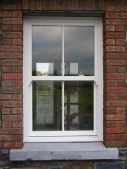
Sash windows remain one of the most recognisable and cherished features of British architecture. These vertically sliding windows have shaped the appearance of streets and homes across the country for more than three centuries. Elegant proportions, efficient ventilation and classic character ensure they remain the preferred solution for period buildings and many contemporary homes.
The origins of the sash window can be traced to the late seventeenth century. Opinion remains divided on whether the idea first emerged in England, the Low Countries or France, but Britain rapidly adopted and perfected it. Early examples appeared at properties such as Ham House in Surrey during the 1670s. Sir Christopher Wren and his master joiner played an important role in refining and popularising the counterbalanced sliding mechanism.
In the Georgian years spanning 1714 to 1837, sash windows attained their defining expression. Tall and slender windows arranged in six-over-six patterns became signatures of refined townhouses across London, Bath, Edinburgh and other cities. Limitations in glass manufacture restricted pane size, necessitating multiple delicate glazing bars. Post-Great Fire building laws promoted set-back frames, producing the familiar deep reveals still visible now.
Victorian developments from 1837 to 1901 introduced important innovations. Advances in glass production allowed larger panes, leading to simpler two-over-two or even one-over-one configurations. Projecting horns were introduced to reinforce the meeting rails against damage. Bay windows proliferated, and removal of the window tax allowed sash windows to reach households across the social spectrum.
Edwardian sash windows, produced roughly between 1901 and 1914, often combined earlier influences. A characteristic layout placed six smaller panes in the top sash over two larger ones below. Windows tended to be wider and lighter in appearance than their Victorian predecessors.
Glazing patterns still distinguish the various historical styles. Georgian windows characteristically show six-over-six or eight-over-eight patterns with fine bars. Victorian counterparts adopt two-over-two patterns that maximise glass area. Edwardian designs frequently mix multi-pane upper sashes with clear lower ones.
