
Call London and Surrey Windows for Sliding Sash Windows Company in Chinatown Recommended
 Sliding Sash Windows Chinatown Company, call London and Surrey Windows on 0208 058 2765 or use our simple online contact form. Our experienced, independently star rated, Chinatown Sliding Sash Window (Installs) Team can assist you with any Sliding Sash Windows in Chinatown Recommended requirements, so please do not hesitate to contact our team on 0208 058 2765.
Timber endures as the traditional and commonly favoured material. Softwood, hardwood and engineered timber provide genuine appearance, reliable insulation when correctly detailed, and the possibility of repair instead of replacement. Authorities responsible for conservation areas and listed buildings frequently require timber construction alone.
To Contact

Modern material choices include quality uPVC and aluminium systems created to match timber profiles. These materials provide lower maintenance, competitive thermal performance and a wide range of colours and wood-effect finishes. Aluminium offers particular strength for larger openings, while uPVC remains the most economical option for many homeowners.
Sash windows bring a range of functional advantages. Controlled ventilation arises from simultaneous air intake at top and bottom. Balanced dimensions allow generous daylight penetration. Fitted with modern double or triple glazing, seals and performance glass, they achieve high levels of energy efficiency and acoustic insulation.
Restoration and sensitive replacement remain vital for the UK’s historic housing stock. Many original windows can be repaired, draught-proofed and upgraded with slim-profile double glazing while retaining their character. New timber or faithful replica units allow owners to uphold the visual integrity demanded in protected locations.
Sash windows have evolved from aristocratic novelty to everyday feature and back to prized heritage asset. Practicality combined with elegance and historical depth keeps them central to British domestic architecture. Whether renovating Georgian terraces, updating Victorian homes or specifying windows for modern schemes, the sliding sash offers a practical and lasting link between historic craftsmanship and today’s living standards.
Two main mechanical types are produced today. Traditional box sash windows house substantial counterweights within hollow timber frames, guaranteeing authentic operation and appearance. Modern spring-balanced versions employ concealed spiral springs that permit thinner frames and easier installation. Double-hung arrangements in which both sashes travel freely, together with single-hung models, continue to be manufactured.
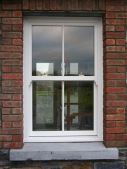
Among the most iconic and appreciated aspects of British architecture are sash windows. These vertically operating sliding windows have influenced the look of streets and dwellings throughout the nation for over three hundred years. Elegant proportions, efficient ventilation and classic character ensure they remain the preferred solution for period buildings and many contemporary homes.
The history of the sash window begins in the late 1600s. Scholars continue to discuss whether the concept originated in England, Holland or France, although Britain soon established itself as the design’s principal home. Notable early installations exist at Ham House, Surrey, dating from the 1670s. Sir Christopher Wren together with expert joiners refined the counterweight mechanism and encouraged its wider use.
Throughout the Georgian era of 1714–1837, sash windows developed into their archetypal form. Tall slim openings featuring six-over-six panes became defining elements of elegant townhouses in London, Bath, Edinburgh and similar cities. Constraints of contemporary glass production required multiple slender glazing bars. Post-Great Fire building laws promoted set-back frames, producing the familiar deep reveals still visible now.
Victorian developments from 1837 to 1901 introduced important innovations. Progress in glass manufacture supported larger panes and therefore cleaner two-over-two or one-over-one configurations. Decorative horns strengthened the meeting rails against breakage. Bay windows proliferated, and removal of the window tax allowed sash windows to reach households across the social spectrum.
Edwardian sash windows dating from approximately 1901 to 1914 commonly fused earlier stylistic traits. Six smaller upper panes above two larger lower panes formed a frequent pattern. These windows generally appeared broader and less heavy than Victorian counterparts.
Pane configurations continue to define period styles. Georgian windows characteristically show six-over-six or eight-over-eight patterns with fine bars. Victorian designs prefer two-over-two arrangements that admit more light. Edwardian windows commonly pair multi-pane upper sashes with clear lower ones.
